Interview: From sensor to human and back again | Topics
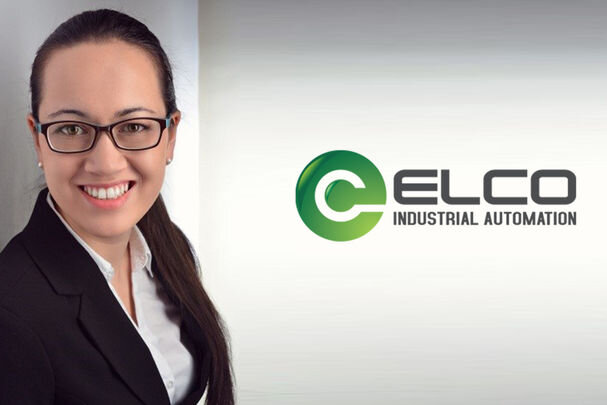
In this interview, Fanny Seifert from ELCO Industrie Automation talks about the Industrial IoT, human-machine communication, IIoT challenges, data sources for industrial apps and the collaboration with SYS TEC electronic.
Interview with: Fanny Seifert, ELCO Industrie Automation
As a systems integrator in a connected world, SYS TEC electronic works with several partners. In our interview series, we introduce these partners and their expertise.
Fanny Seifert from our partner ELCO Industrie Automation talks about Industrial IoT, the challenges and economic benefits of IIoT, and the collaboration with SYS TEC electronic:
What is the IIoT?
I see the Industrial Internet of Things as a way of connecting a wide variety of ‘things’ in industry – such as machines, measuring instruments, components, sensors, finished products, etc. – as well as people, via the internet, in order to generate individual added value.
How can communication between people and machines be successful?
It is crucial to involve people, drawing on their knowledge and experience. Data must therefore not only flow from the sensor to the cloud, but also to people and back again.
On the one hand, a ‘translator’ is needed who understands the languages of machines and adapts them for human understanding – for example, a platform such as IoTHub, which translates the language of machines for humans and vice versa. Secondly, a medium is needed through which machines and people can communicate. Industrial apps, for example, are well-suited for this purpose; people can use them on tablets or smartphones – which almost everyone now carries with them – to interact with the machine.
It is important that these translators and communication channels can be customised individually for each use case – that is, for each machine and each person. With the right tools, this is very straightforward.
To what extent does the IIoT contribute to value creation?
Thanks to the IIoT, companies gain greater transparency into their processes, can identify opportunities for optimisation and make these processes more efficient. Furthermore, connectivity enables processes to be automated, thereby saving resources and simplifying operations. In some cases, the new value created through the IIoT can become entirely new ‘digital products’ in their own right. Ultimately, the IIoT can help to reduce costs or generate more revenue.
Production at SYS TEC electronic is a great example of this: using Wirepas technology, staff can monitor the temperature and humidity in their production area, which are critical for manufacturing their products. They can do this remotely and over a long period of time. This means they can spot issues in good time, for example if the air-conditioning system fails. Consequently, the SYS TEC electronic team can react quickly and prevent production from coming to a standstill due to excessively high or low temperatures, or from producing rejects.
What challenges exist in the IIoT?
In my experience, two challenges frequently play a significant role.
Firstly, these ‘things’ that one wishes to connect to one another usually speak different ‘languages’. In a production hall, for example, it is common to find a wide variety of machines with a wide variety of control systems, each using different protocols. These range from old systems right through to brand-new ones. This heterogeneity needs to be reconciled and standardised so that the ‘things’ can communicate with one another and with people in a single language and via a single medium.
Furthermore, the issue of security plays a major role in many cases. When all ‘things’ are connected via the ‘internet’, many people are concerned that unauthorised parties might gain access to this data. Appropriate mechanisms and technologies must be in place to minimise this risk. Thus, the cloud does not always have to be the storage location of choice; it is often sufficient for the data to be available locally, stored on a local computer and accessible only via the on-site plant network. Furthermore, modern encryption technologies, for example, can be used to secure data transmission and protect it from unauthorised access.
Where does the data for industrial apps come from?
As mentioned, this can come from a wide variety of data sources. These include machine control systems, environmental data measured by sensors, existing systems such as databases and MES systems, amongst others, components tracked using RFID, or even human knowledge that is digitally recorded. For example, experienced machine operators usually know best the quirks of the machines and how to easily resolve them.
But there are so many other data sources as well. The use cases and associated data sources are extremely diverse. It’s very exciting to experience this when you’re working in the field of IIoT.
What are the benefits of the collaboration between ELCO and SYS TEC electronic?
The benefits are clear: SYS TEC electronic’s hardware solutions form the basis of a high-performance edge layer, including the connection of fieldbuses and the pre-processing or aggregation of data. Finally, ELCO’s solutions are used for the cross-site and cross-system networking of production data and the calculation of key performance indicators. This enables us to provide technological support for the entire IIoT architecture, thereby not only offering customers holistic solutions but also implementing new use cases, for example based on Wirepas.
We have both made it our mission to standardise data from a wide variety of sources and make it available to other systems for further processing. Specialised expertise, openness and, above all, a shared goal are what make our partnership so special.
Joint customers benefit from a compelling IIoT solution: the sysWORXX CTR-700 from SYS TEC electronic combined with the IoTHub from ELCO.
